
“The more that you read, the more things you will know. The more that you learn, the more places you’ll go.” Dr. Seuss
Reading is a strategic process with the goal being comprehension. (Tompkins 2016).
When we read, we:
- identify the words we see (word recognition);
- understand what they mean (comprehension);
- connect words and their meaning so that reading is automatic and accurate (fluency). (twinkl.com)
We read to learn knowledge and skills not only for academic purposes but also to attain our fullest potential and be successful in life (McClaskey, 2016). According to Bridges (2014), “Many of our revered celebrities and leaders are avid readers. Indeed, it’s hard to find successful people who aren’t”.
When should we read? – Everyday for at least 10 minutes
How should we read? – Find a space with little or no distractions; Begin using materials on topics that interest you and eventually explore a variety of topics. Begin with just a few pages and gradually increase the amount that you read (EBSCO Post, 2023). Make sure you are comfortable but too comfortable to fall asleep.
But WHY?
Reading has many benefits. Here are a few:
Relieves stress and provides an escape
Empowers you to become an active citizen; expands your vocabulary
Advance your academic achievement
Develops your ability to communicate both orally and in writing
Additional Benefits
- Enhances your empathy and knowledge – of yourself, other cultures, heritage and ways of being and thinking.
- Builds your ability to understand a lot of information when immersed in the flow of reading
- Develops your imagination and creativity
- Improves concentration and memory capacity
- improves your self-confidence as a reader
- Helps you discover the world
- Inspires success
Need more reasons? Here are several as shared by students.
“Reading is very important to get more knowledge.” 4th Former
“Helps open your vocabulary. Reading helps to visualize what you [are] reading.” – 3rd Former
“Reading helps with [your] education.” 1st Former
“You educate yourself when you read. For example, you won’t understand what is written around you. For example, things in the classroom.” 1st Former
“To get information.” 4th Former
“If you don’t read you won’t get the knowledge you need. Certain things can only be learned by reading. It helps them to develop the knowledge that you have.” Mahleica C.
“To get more knowledge.” D-Nesha R.
“To get more understanding” – Attarah J.
“We read to improve our vocabulary.” Iyema L.
“Reading can help us with most things in everyday life.” – Shamya G.
“To learn new things and about our past and history. To guide your future” – 4th Former
“To help society by informing students, people and society in general about what is happening.” 4th Former
“In my opinion, I read to write and put things in my own [words].” 5th Former
“To understand and comprehend; for example, you have a paragraph, you read it to know what is happening.” 5th Former
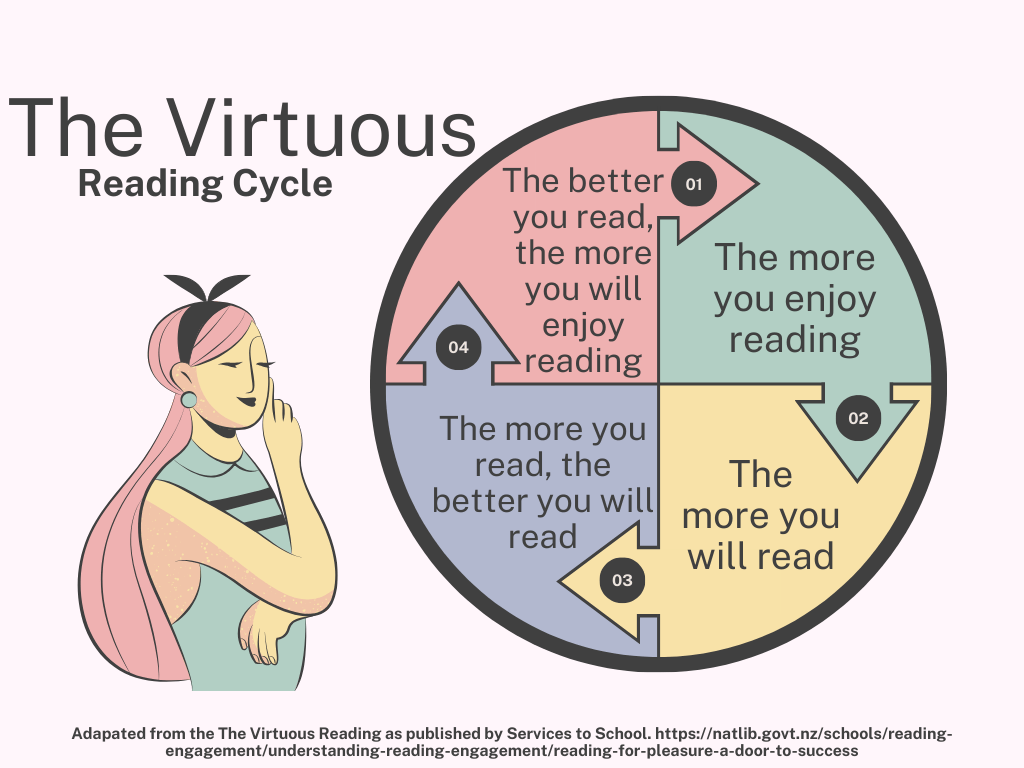
“Reading is essential for those who seek to rise above the ordinary.” Jim Rohn
So, Rise Above the Ordinary and READ!
#LiteracyMatters
References
Bridges, L. (2014). The joy and power of reading. California English, 20(2), 7-2
EBSCO Post. (2023, June 12). The power of leisure reading.
McClaskey, K. (2016, May 8). Continuum of purpose: Fostering a meaningful life. Make Learning Personal.
National Library of New Zealand. (n.d.). Reading for pleasure: A door to success.
Twinkl Teaching Wiki. (n.d.). What is reading?
Tompkins, G. E. (2016). Language Arts: Patterns of Practice. Pearson Education.
Discover more from ROAR
Subscribe to get the latest posts sent to your email.
