Ludwig Wittgenstein (1922) said that “the limit of my language is the limit of my world”.
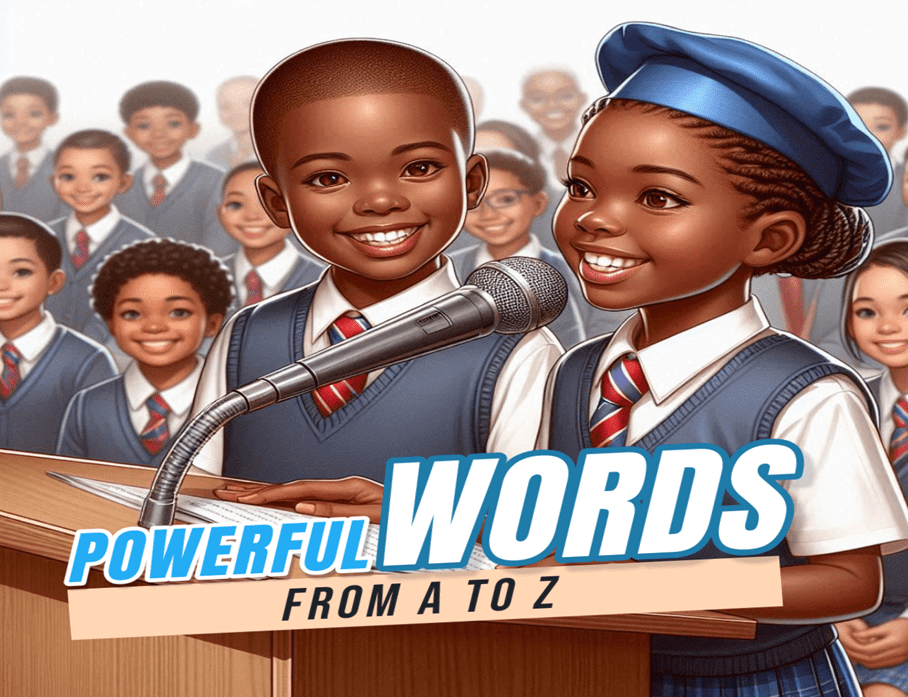
Words have the ability to change the world. When we develop our vocabulary, we:
improve the way we communicate with each other raise our ability to understand what we read enhance our writing skills increase our confidence advance our chances for success in life
Hence, each week we will share word(s) to boost our vocabulary so that we can speak, listen, read, write and think effectively.
We begin our A to Z series with 2 words:
Amplify – to make larger, greater or stronger; enlarge or extend. Most hearing aids simply amplify sounds (The Sun, 2006)
Authentic – not false or copied; genuine; real The renowned chef prepared an authentic Italian meal.
Cubs, find a way to use each word in your conversation or writing in the upcoming week. Afterall, it is important not only to know the word but to use it.
Here is another activity just for FUN!
The vowels in each of the following countries’ names have been removed. Can you figure out the names?
“Reading is an active, imaginative act; it takes work.” – Khaled Hosseini
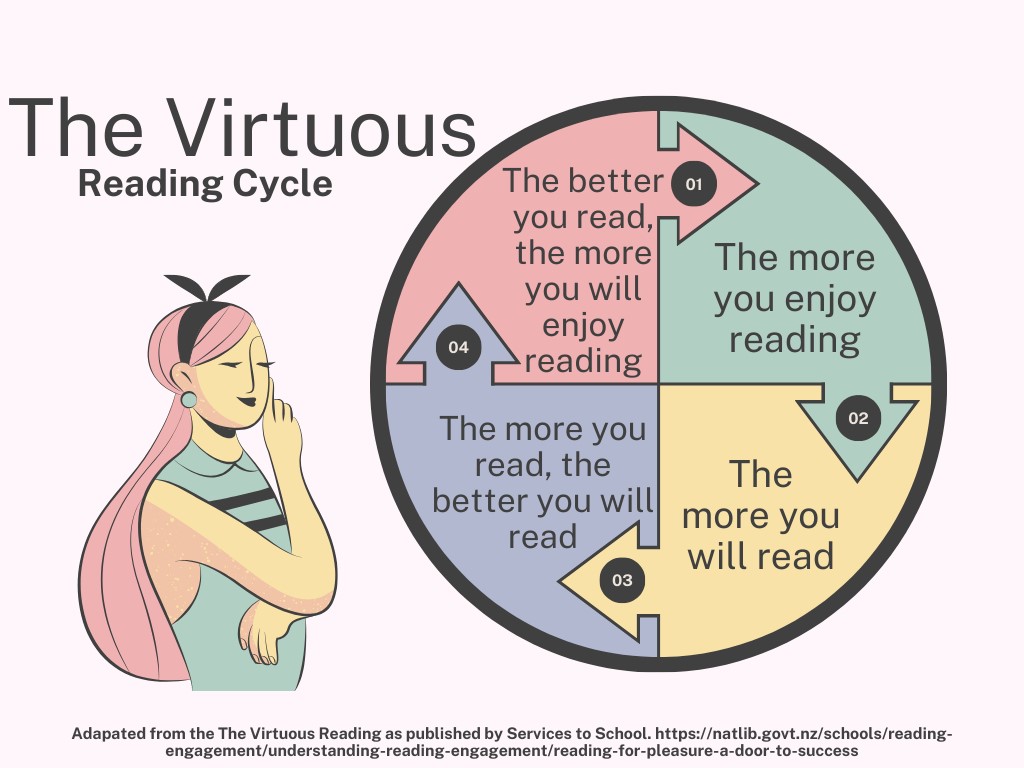
Can you remember the last time that you held a book in your hand and read without it being school or work related? Hmm….
Technology has drastically changed the way that we read. The relationship between technology and reading has impacted reading habits since there are many devices and platforms that are easily accessible for readers (Technology.org, 2023).
Here are a few ways technology has changed reading:
Portable – We can access our favourite books on a tablet, smartphone or other reading platforms from anywhere. These devices tend to be smaller and lighter so it may be easier to carry around than a physical book. We can even play games, do online shopping and other activities without leaving home (Technology.org, 2023).
Interactive – Technology has provided a variety of ways to interact with the text. We can change settings such as font sizes and background colours to read better. Some platforms allow you to make notes, search a dictionary and engage you with other activities as you read (Technology.org, 2023).
Resourceful – There are many varieties of digital tools and resources to improve reading or other areas of learning. Individuals who are struggling with reading can be taught using reading programs. Additionally, there is access to numerous content from around that can be acquired to make learning enjoyable both in and out of the classroom.
Cost-friendly – Reading material can be downloaded for free (Thombson, 2022).
But should it be the only way to read?
There is still value in getting in some Page Time.
Books help to control the information being sought. Although it may be limited at times, it gives you the direct information needed. Whereas with a Google search, a wide array of information would be available but sometimes it is like trying “to find a needle in a haystack” (Schwartz, 2023). This can be time consuming.
With books, there are no distractions. There are no Ads popping up or social media notifications. Therefore, you are better able to concentrate on reading.
Engaging with books has proven to improve comprehension and help you remember what you are learning better. Research has shown that comprehension suffers when you read from a screen (Schwartz, 2023).
They are also portable. They also do require charging or access to the internet to function. Making them great for places with limited internet capability.
When one reads books first, they are better able to transfer these skills when reading from a screen (Korbey, 2023).
So cubs, what do you think?🤔 Do you prefer Screen Time or Page Time? What do you believe reading will be like in ten years? Will “it be necessary” for individuals to be able to read? 😁 Share your thoughts with us in the comments below.
“Reading is an active, imaginative act; it takes work.” – Khaled Hosseini
In last week’s issue, we talked about the benefits of reading. We also shared that reading involves
identify the words we see (word recognition);
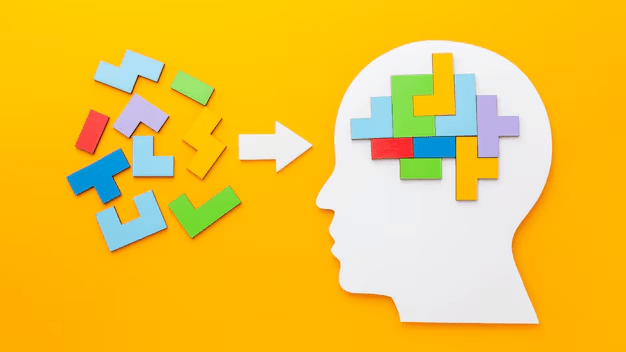
understand what they mean (comprehension);
connect words and their meaning so that reading is automatic and accurate (fluency). (twinkl.com)
Most people believe that once you have accurately pronounced the words in the text that you have read successfully. However, comprehension plays a significant role in reading. After all, we read to gain meaning and comprehension is “the ability to make meaning” (LiteracyHow.org).
For example, which sentence is easier for you to understand
The school had a food fair yesterday.
The Gayzorniplatz was moving his tonk. (Cooper, Robinson, Slanksy & Kiger, 2015)
Naturally, Sentence A is easily understood. Not only could the words be called but you could associate meaning with the words; maybe from your own past experiences.
Sentence B, on the other hand, presented a challenge. The words the, was, and his were recognized. You probably thought that the word Gayzorniplatz was a proper noun because it is capitalized. You may have also used familiar word patterns to help give some semblance of pronunciation. Nevertheless, because the word is unfamiliar and you are unsure of its pronunciation, you could not construct meaning properly (Cooper et al., 2015).
Joel Warrican (2012) stated that for an engine to run it needs certain components, the same applies to reading. One must know the words and be aware of the context to construct meaning. Both identifying the words and understanding them are two big jobs in the reading process and they are always a part of the process (Copper et al., 2015).
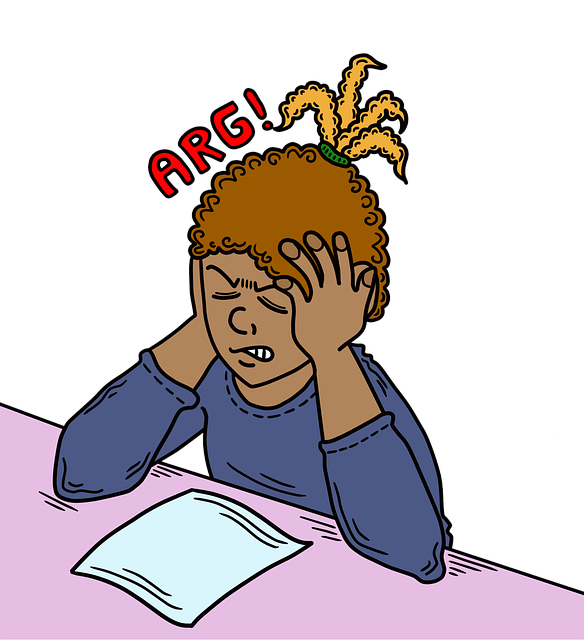
Although comprehension is important, it is often the part that gives us the most trouble. Sometimes when reading, we may find it difficult to understand the message that the author is trying to convey. This can be so FRUSTRATING.
Here are six strategies that you can employ to aid in comprehension.
What about reading material or text for school? Watch the video below.
Remember:
“Reading is essential for those who seek to rise above the ordinary.” Jim Rohn
So, Rise Above the Ordinary and READ!
#LiteracyMatters
References
Cooper, J. D., Robinson, M. D., Slansky, J., & Kigerm N. D. (2015).





Leave a Reply